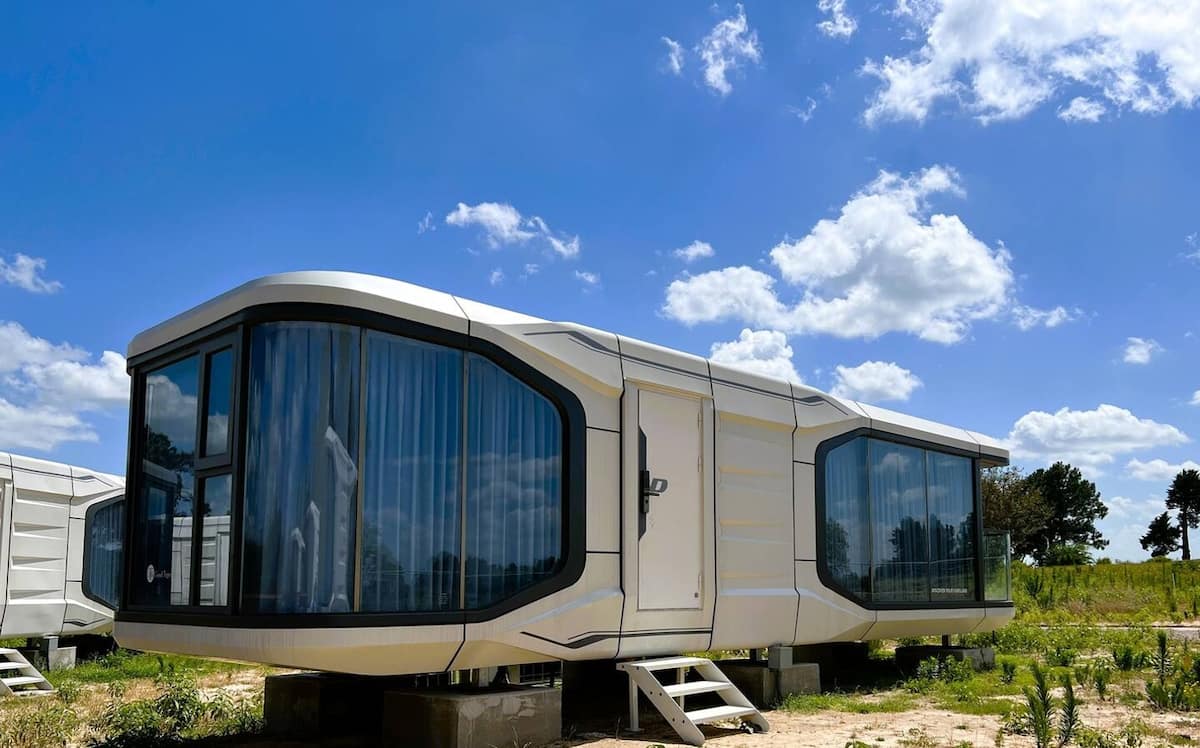
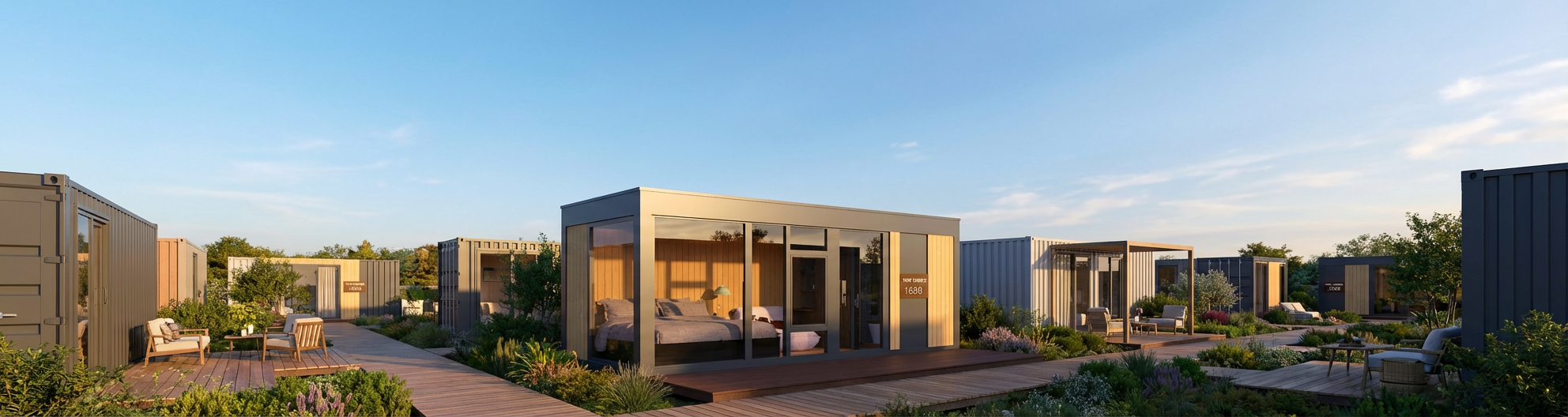
Do you want to know the basic size of a container house?Don’t want to spend money on the wrong size?If so, you’re doing the right thing by checking the sizes first.
A container house starts as a standard shipping container, so its size follows the same frame and limits. These container houses have a fixed length and width and that’s the foundation of your container house.
The most common sizes you see are 20ft and 40ft models. These two sizes shape almost every container home project you find today. When you understand their real measurements, you understand how much living space you can create.
Scroll down to know exactly which size of container makes sense for your project.
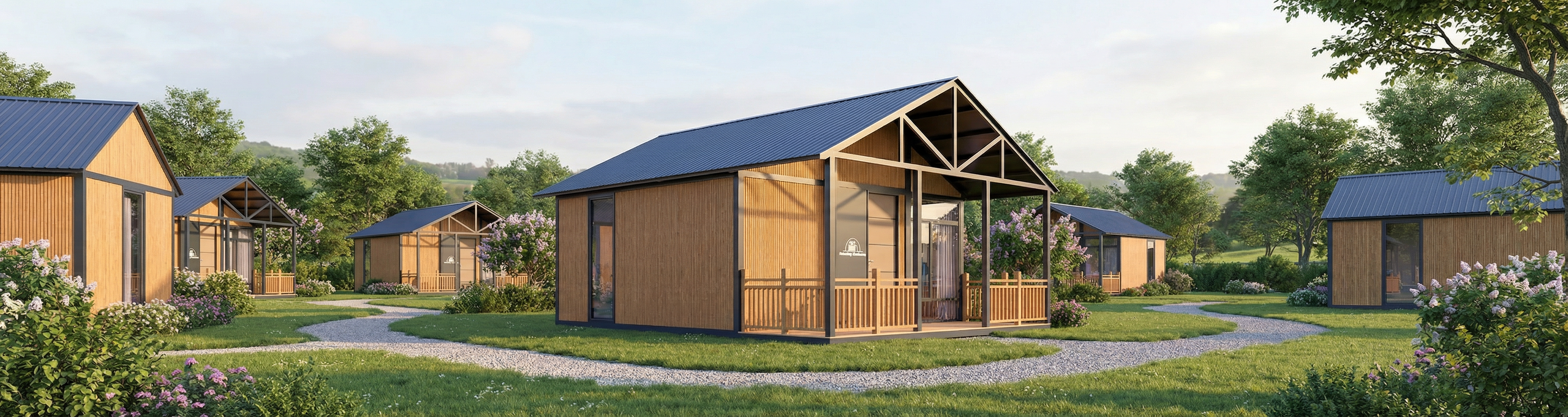
You should note that a standard container house basically keeps the original container frame. So, the external size sticks to ISO standard dims (dimensions).
The two very most common types are 20ft and 40ft container houses. Typically, a 20ft container is mostly about 20ft long and 8 ft wide plus 8.5 ft high on the outside. And a 40ft container is commonly about 40ft by 8 ft wide plus 8.5 ft high on the outside. But after you add wall panels, insulation and flooring the internal space is a bit smaller.
Therefore, you will basically see these external and internal dims repeated in most container houses. Because the basic box frame mostly remains the same.
You can likely use a 20ft container for a single room house or compact unit. This basically gives you around 150sq ft of usable floor space. In this space, you are good enough for one small bedroom or living area. Plus a compact bathroom or kitchenette if the layout is tight.
Because a 20ft container is fairly light and small. So, you can install it quickly. That’s why buyers mostly pick this size.
A 40ft container basically gives you about double the floor space of a 20ft container. Functionally, you’re getting right around 300sq ft of usable floor area inside. This long floor plan gives you room for multiple zones.
As an example, a 40ft container house may have a small bedroom, a living/dining area, a bathroom and even a kitchenette or office nook.
Many builders use these 40ft containers for worker dormitories, small family cabins or large glamping units. The real bonus is that extra length provides you the “opportunity to divide the internal space into functional zones”.
So, if you connect two 20ft containers, end to end, then still you will have the same width and height… but about 300sq ft inside (similar to a 40ft container). Thus, this is because many people buy a single 40ft container rather than two 20ft containers.

You have to consider a high cube container if you want extra ceiling height. Basically, these high cube models have the same length and width… but one foot taller.
So, a 20ft high cube container has approximately 9ft 6 inches external height. Plus gives you roughly 8ft 10 inches inside. On the other hand, a 40ft high cube container also has approximately 9ft 6 inches of external height. Plus this also gives you roughly 8ft 10 inches inside. And that extra foot of height can make a huge difference for comfort.
For example: if you want insulating panels in a standard container, you will lose around a foot of ceiling height. Like, you will get only about 7ft of clearance in a normal 8.5ft container. Thus, with a high cube container, you can install insulation and still have about 8ft of ceiling height.
Therefore, this taller space is popular for container houses and offices where you want room for lofts, tall doors, or for better airflow. In practice, high cube models allow thicker roof insulation and improve the feeling of spaciousness.
You can create much larger homes by combining multiple containers. A wide living room or an L-shaped floor plan is possible when you join containers side by side. Because each container is 8ft wide. So putting two together gives you around 16ft of width. And three would give you 24ft, and so on.
We all know containers are modular blocks. So you can mix and match many configurations. Let’s give you a real example: One design “Amagansett Modular House” used stacked 40ft containers to create an 1,800sq ft house.
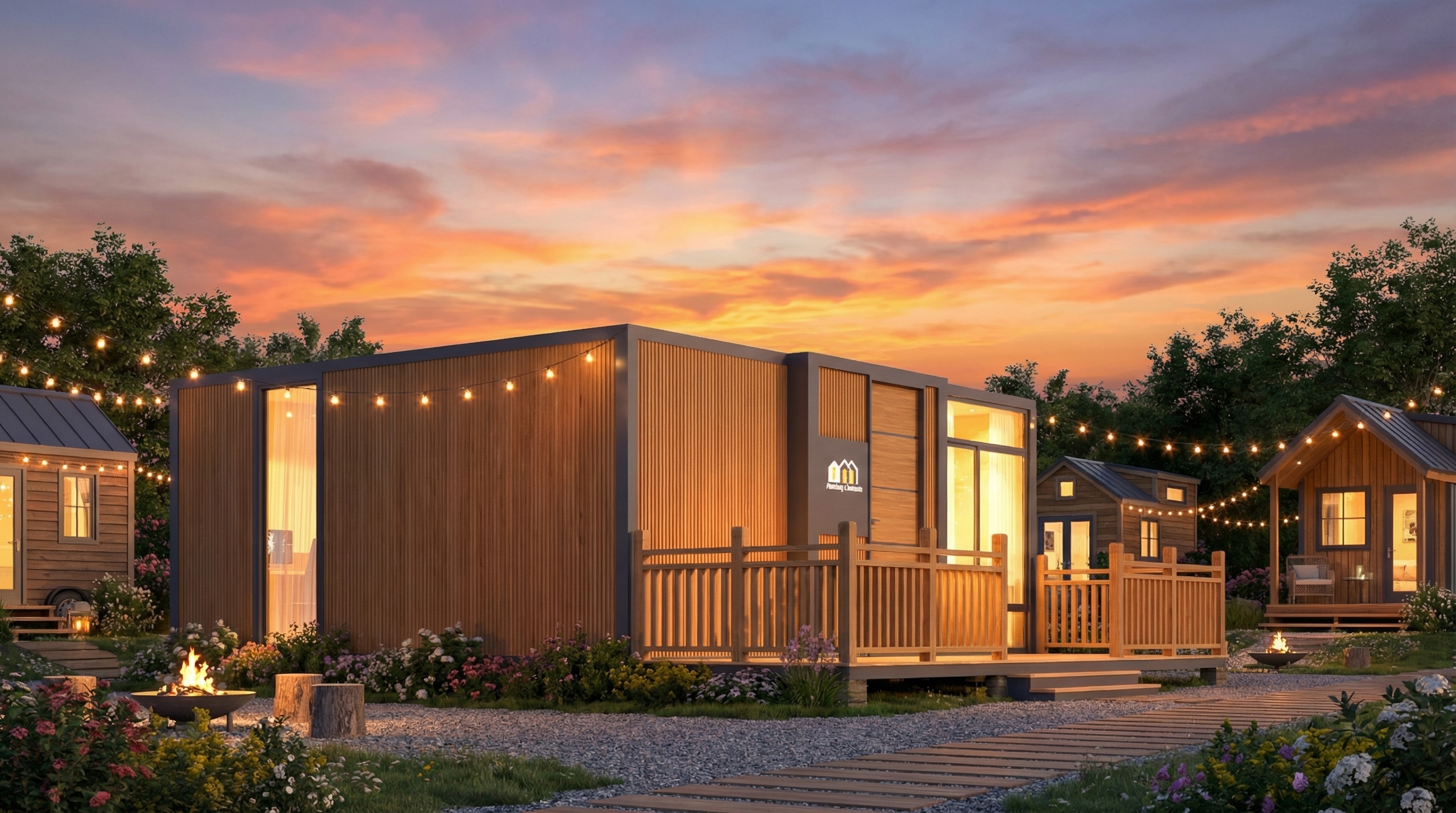
Generally, you can arrange containers both vertically or horizontally according to your needs. Dormitories, classrooms and large camps mostly use many containers combined. Thus, by linking containers side-by-side and removing open walls between them, you will get wide open rooms. And by stacking them, you can add floors.
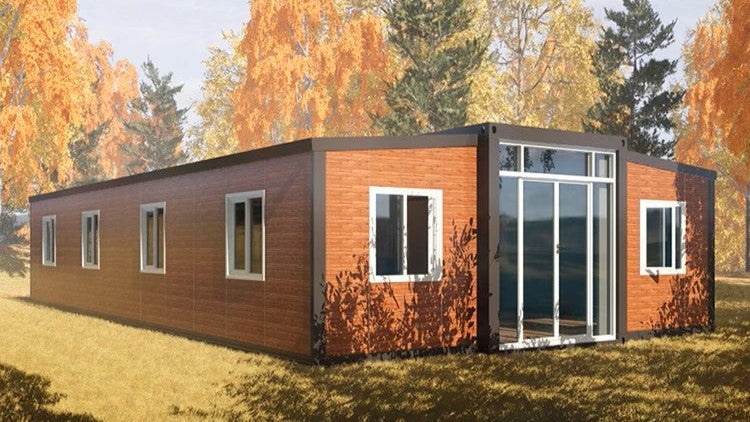
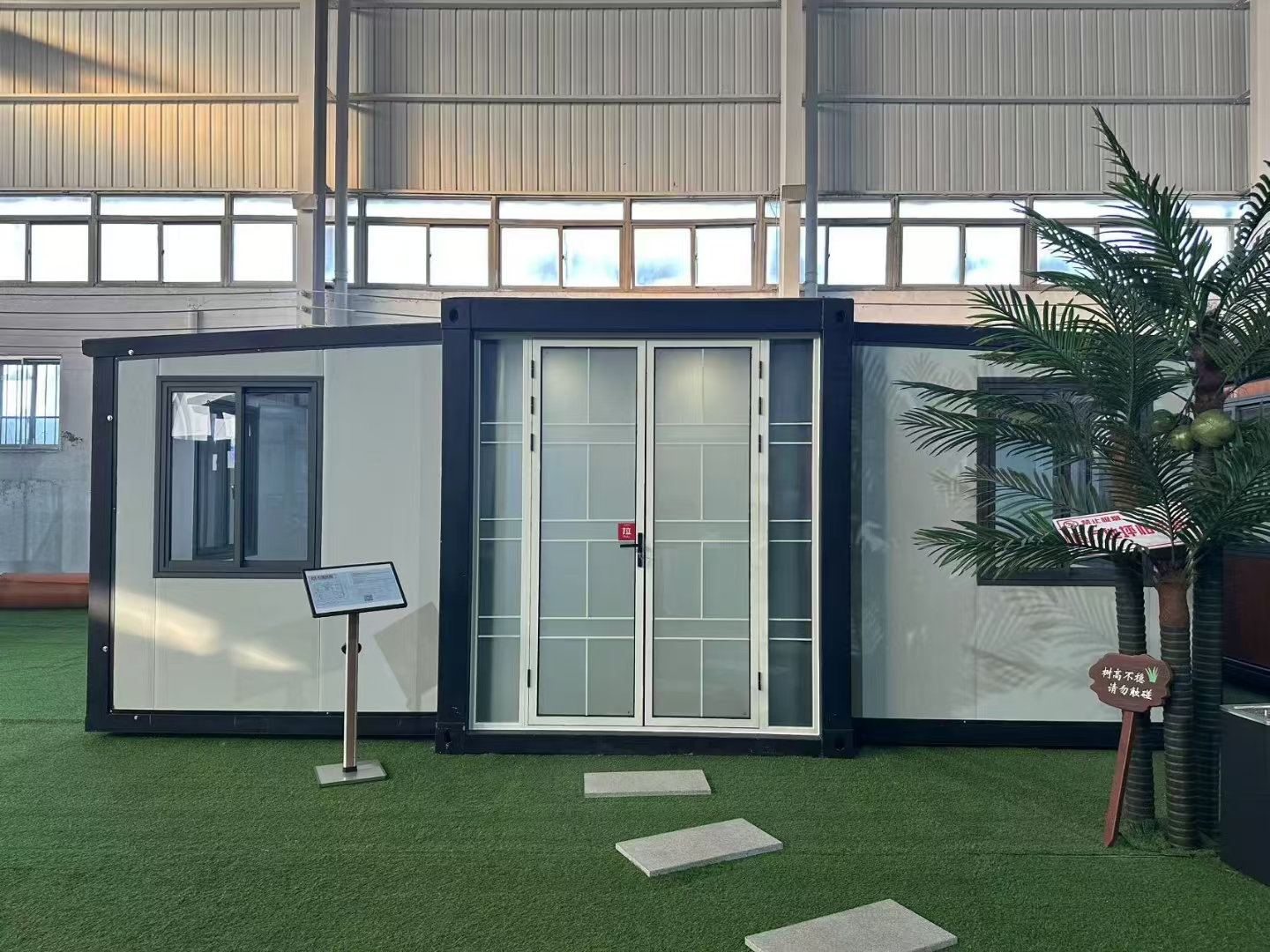
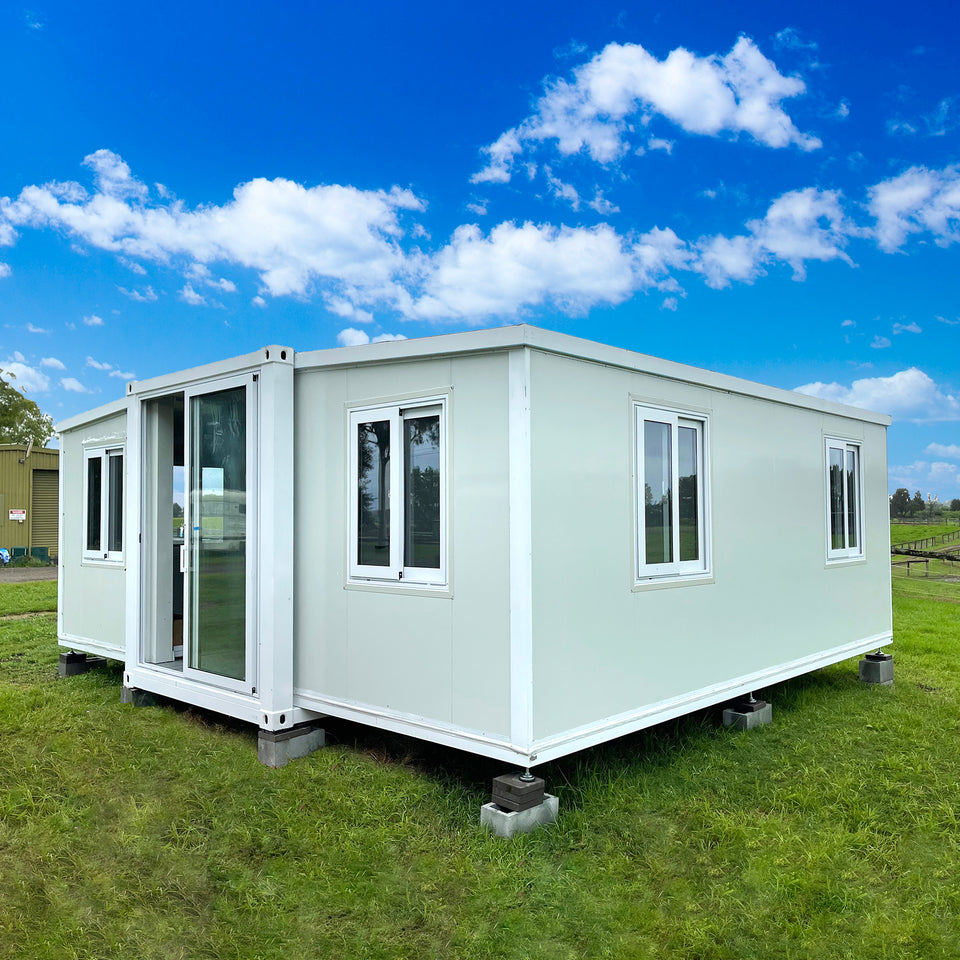
You might also see container houses with pop-out or expandable sections. These designs increase the usable space beyond the original box.
An expandable container house basically folds flat for shipping. And then unfolds on site. When it arrives you can slide out panels or sections to make living areas. In its compact form, it fits easily on a truck. After expanding, it can offer much larger living rooms or bedrooms than a fixed-size container. This is especially useful for temporary housing or emergency shelters, where you want to deliver units quickly and then “pop” them open for more space.
Because these expandable houses fold up, they save shipping cost and time. And they remain very popular when you need fast-deploy plus moveable housing.

You have to start by thinking about how you plan to use this container house. If you’re just for one person or for a small space then you can go for 20ft container. But if you’re looking for separate rooms or space for a family then 40ft container (or multiple containers) is a better choice.
Resident and layout: You need to have enough space for all occupants and the rooms they require. As mentioned, a 20ft is best for one or two people. And for more people or multiple bedrooms, go for 40ft or more.
Transport and lifting: You have to confirm that the container size can be delivered to your selected site. Means check local limits on road transport. Because many areas allow 20ft containers on trucks without special permits. But large models may need extra permits or special cranes.
Site and foundation: You have to make sure your site has enough room and the right support. Basically, containers are placed on corner posts. So you need a level foundation (piers or slab) for their corners. And also measure your lot to make sure 20ft or 40ft container fits with clearance from obstacles.
Regulations and permits: You have to check local building codes. Some places have rules about converting containers into houses, or about stacking them. So, make sure your plan (size, height and layout) meets zoning and building requirements.
Thus, all these factors – number of people, room needs, transport logistics, and site conditions – will help you in picking the optimal container size for your house/ project.
Now you know the standard sizes (20ft and 40ft) of container houses. Therefore, you can plan your project with ease and confidence. You have to consider all your needs and pick the right combination of containers.
If you still need help in finding the perfect container house, contact us today to explore our available sizes and models for your needs.